
Time flies.
It has been three years since I’ve received my Ph.D in History. More than a decade ago, I started this blog while an undergrad student (really aging myself) and today I noticed my tagline was still “journey to the Ph.D.”I am now starting my final year of a two-year post-doc. When I started this journey I was unsure of what my “professional career” would look like. I only wanted to live someplace I enjoyed, wake up and enjoy what my, and of course, secure a well-paying job. Keyword: well.
My first job post-graduation was a visiting scholar position in Jackson, Mississippi. I chose this role solely based on the location. Initially, my goal was to transform the dissertation into a manuscript, which I partially completed. Yet after two chapters, I shelved the project and focused on other research projects, teaching, and conducting archival work for the FIS Library. My plate was rather full, but I enjoyed my everyday work. When the two-year term of the visiting scholar role concluded, I transitioned into a postdoctoral fellowship at another institution. There were no teaching requirements, but some ongoing grants and commitments took me back to Mississippi each month. So, the work still continued. As I enter my second year, I am centering my writing as I hope to complete a majority of the new book and a digital project.
As we enter this new job cycle, I wanted to share some useful tips on applying to postdoctoral fellowship. Perhaps this will help those in the humanities like myself.
The Cover Letter
There is no right way to write a cover letter, but in the same sense, there are many wrong ways. The biggest point I can stress is ensuring throughly explain the project you are completing during the postdoc, a research plan, and your outcomes. When I applied for my current position, I carefully reviewed the center’s call for applicants:
…invites applications for the inaugural University of South Carolina Civil Rights Scholars Postdoctoral Research Program (Civil Rights Scholars Program)…Building upon the University’s strong background of civil rights scholarship and expansion of its archival collections, the Civil Rights Scholars Program intends to raise the profile of civil rights research nationally and play a pioneering role in advancing Civil Rights Studies as an interdisciplinary field of scholarly inquiry rooted in African American Civil Rights history.
…postdoctoral researchers will contribute to the mission of the Center for Civil Rights History and Research (the Center) by advancing interdisciplinary civil rights-related research and public history, with opportunities for mentorship, collaboration, and exploration of shared interests with the Center’s extensive network of scholars and students engaged in civil rights-related research. Scholars will also have access to the extraordinary collection of primary source materials housed in the University’s special collection libraries...
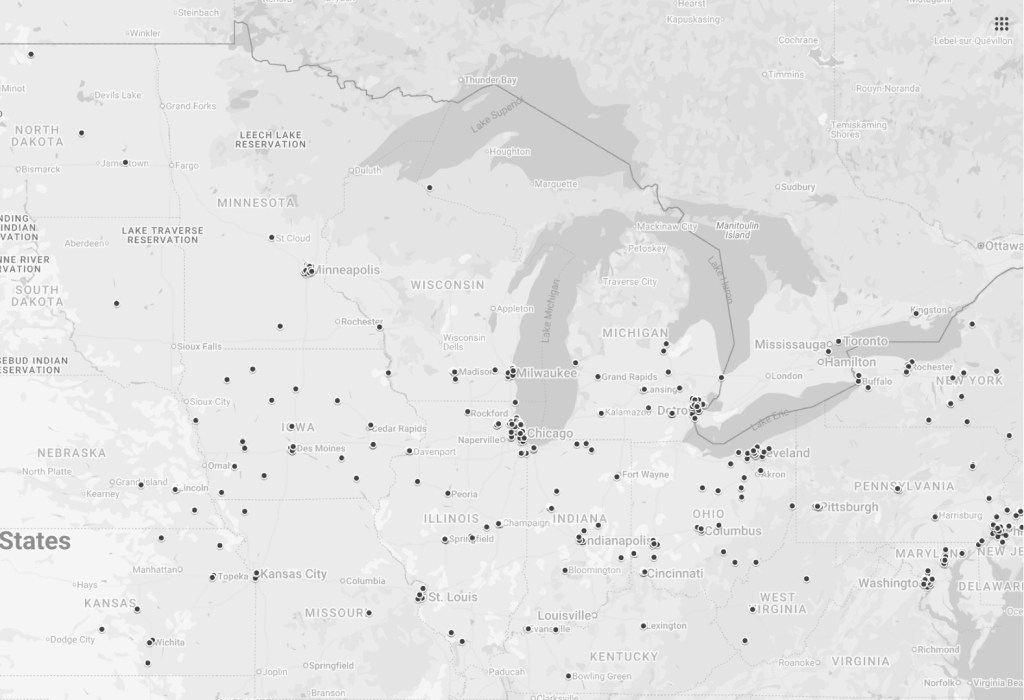
From this announcement, I crafted my cover letter in response, ensuring that I highlighted my research in civil rights history and a project I could complete during the two-year job term. The project I proposed was a digital, interactive map and a journal article, which I detailed further in the required research proposal. Looking back, I should have talked about my proposed project a tad bit more, but I mainly focused on my research projects up until that point.
Cover Letter Breakdown
Paragraph One—Introduction to my work and my interest in the position
Paragraph Two—Discussion of research projects and their interventions in Civil Rights Studies
Paragraph Three—Emerging scholarship and recent presentations and awards that supported my civil rights research
Paragraph Four—My public history and digital scholarship and how I will support the center through my digital humanities work
Paragraph Five—My community work which centered on teaching civil rights history in nontraditional settings and my archival preservation work
Paragraph Six—Conclusion
The Research Proposal
This document was a total of six paragraphs which centered on my proposed project—the completion of a comprehensive list of Freedom Summer volunteers and the development of a digital map providing a profile on each known participant. Here, I focused on this civil rights campaign’s rich historiography and my project’s major interventions. The final two paragraphs discussed the archives I planned to consult and the archival work completed thus far. In reviewing my own proposal, a year later, I would have incorporated more of what the center offered beyond critical time and funding to complete this work.
The CV


Leave a Reply