
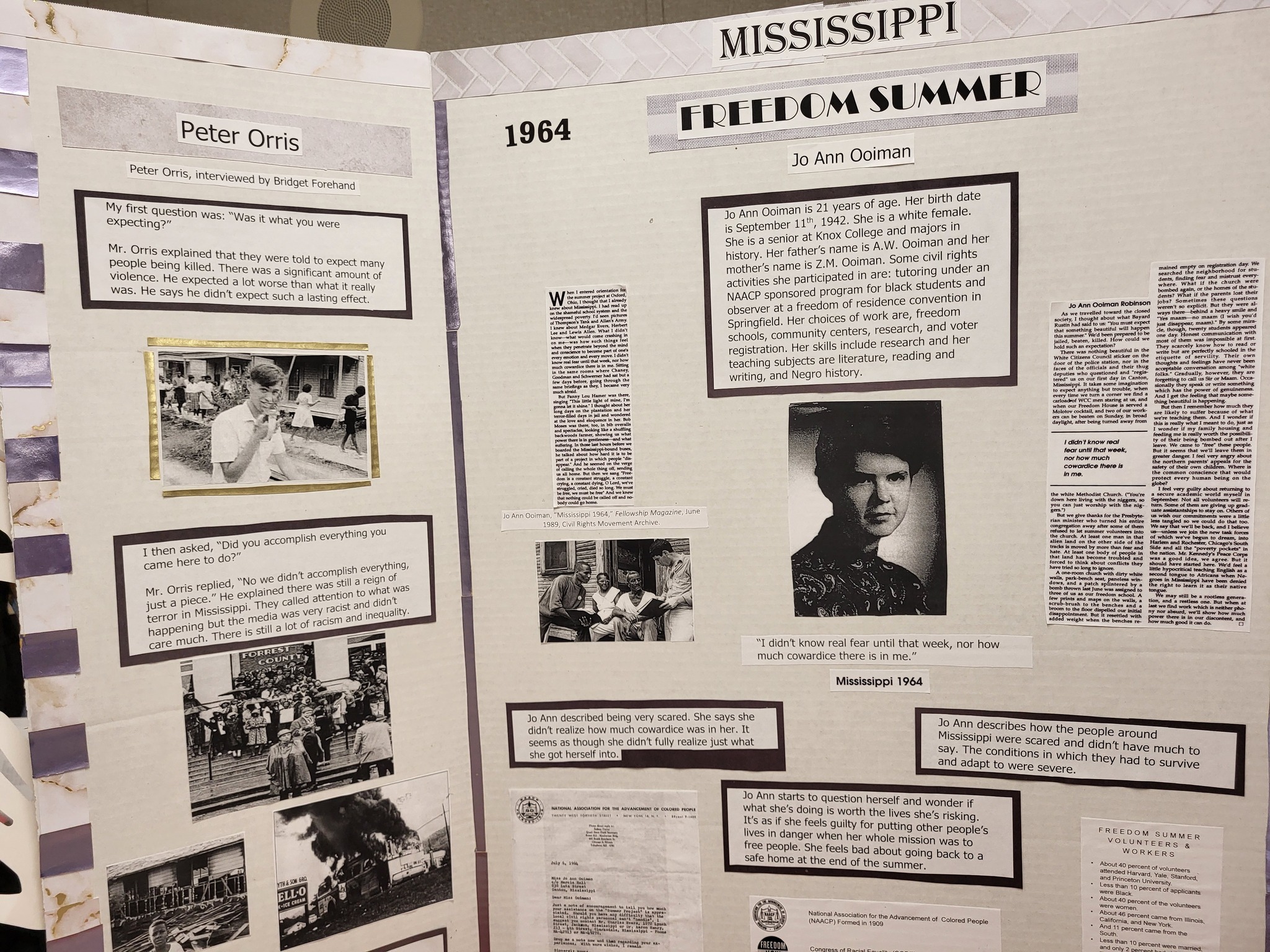
Jo Ann Ooiman Robinson was a Freedom Summer volunteer I thought I knew well. One of my students did an award-winning project on her (she won first place at the regional History Day competition at the school). I also reviewed her application numerous times while processing the FIS Library—we now have a site folks! But I came back to her application and noticed something I overlooked in the third application attached to her folder: she went to Hopkins just like me.
This post dives into Ooiman Robinson’s experience during the Mississippi Summer Project, through her applications and in her own words.
Letter, March 1964
I am interested in participating in the Mississippi Freedom Schools program this coming summer. Please send me all appropriate information, application forms, etc.
Thank you,
Jo Ann Ooiman
Williston Hall
Knox College
Galesburg, Illinois
Photo of Ooiman that accompanied her application
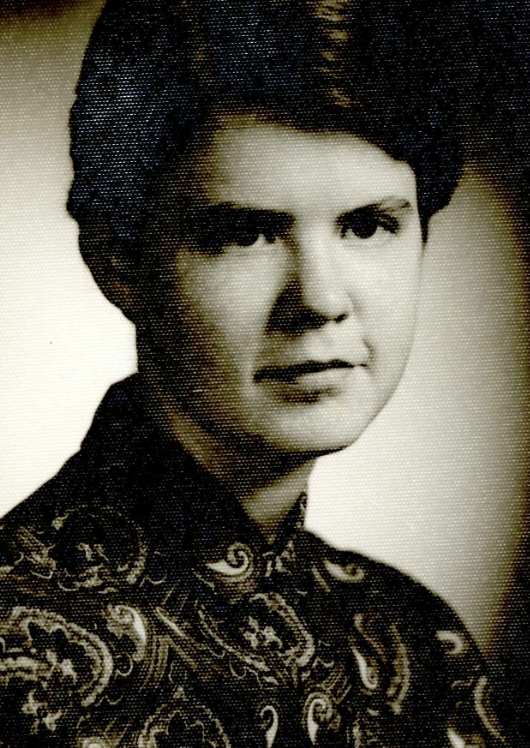
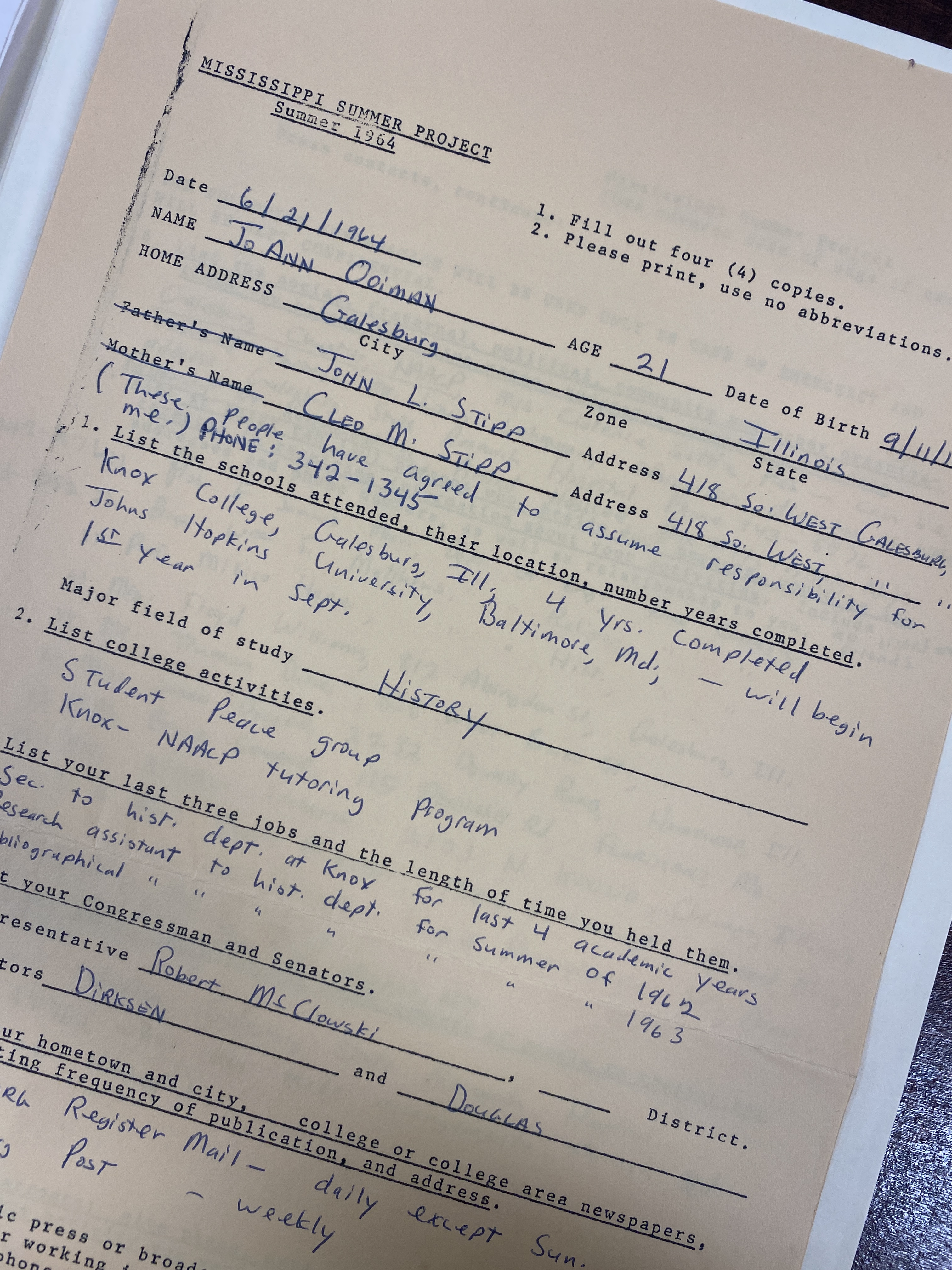
Born on September 11, 1942, Jo Ann Ooiman was a recent graduate of Knox College, where she majored in history. Her four-page application reveals her determination to join that summer project, in addition to her civil rights experience.

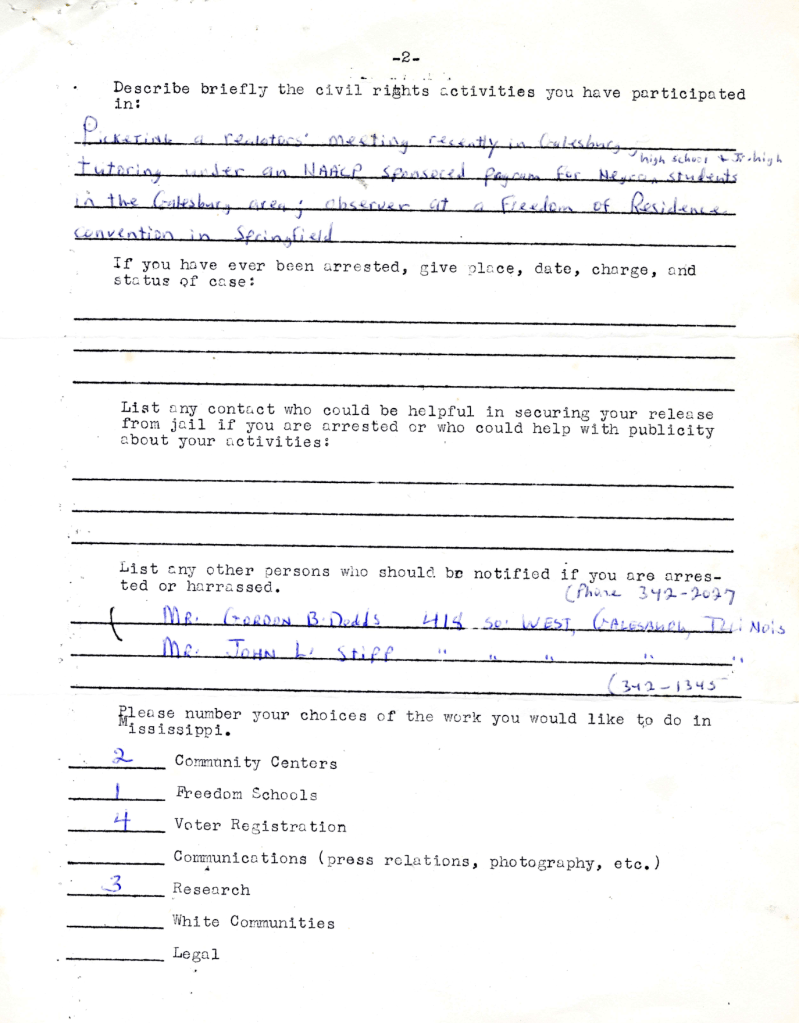

A copy of one of her applications is in the MS State Sovereignty Commission Records—but the FIS Library has three applications.
Like most of the volunteers accepted to join Freedom Summer, Ooiman attended the second orientation session in Oxford, Ohio, by this time the three civil rights workers, James Chaney, Micky Schwerner, and Andrew Goodman, had gone missing.
“When I entered orientation for the summer project at Oxford, Ohio, I thought that I already knew about Mississippi. I had read up on the shameful school system and the widespread poverty. I’d seen pictures of Thompson’s Tank and Allan’s Army. I knew about Medgar Evers, Herbert Lee and Lewis Allen. What I didn’t know-what would come crashing in on me-was how such things feel when they penetrate beyond the mind and conscience to become part of one’s every emotion and every move. I didn’t know real fear until that week, nor how much cowardice there is in me. Sitting in the same rooms where Chaney, Goodman and Schwemer had sat but a few days before, going through the same briefings as they, I became very much afraid. But Fanny Lou Hamer was there, singing “This little light of mine, I’m gonna let it shine.” I thought about her long days on the plantation and her terror-filled days in jail and wondered at the love and eloquence in her. Bob Moses was there, too, in bib overalls and spectacles, looking like a shuffling backwoods farmer, showing us what power there is in gentleness-and what suffering. In those last hours before we boarded the Mississippi-bound buses, he talked about how hard it is to be part of a project in which people “disappeared.” And he seemed on the verge of calling the whole thing off, sending us all home. But then we sang “Freedom is a constant struggle, a constant crying, a constant dying, 0 Lord, we’ve struggled, cried, died so long. We must be free, we must be free” And we knew that nothing could be called off and nobody could go home.”
—Jo Ann Ooiman Robinson, “Mississippi 1964,” Fellowship, 1964
COFO assigned Ooiman to Canton, Mississippi, a town which the Congress of Racial Equality (CORE) had long operated out of. Tasked alongside three other volunteers in operating a Freedom School, they taught 20 kids that first day and stayed well after the summer’s end with reports she authored dating to the summer of 1965. She later worked on the CORE Task Force’s Canton Project.
“My main concern this week has been to get the Freedom Schools running again. We (Arlene and I) held a class in the Canton Center Tuesday night which was fairly well attended and, so far as I can tell, pretty successfully handled…In the coming week I expect to get myself moved to Mrs. Robinson, send off a good report to Liz Fusco on the Canton area schools, help run off the library list (some 67 pages), write an article for the Citizen, fulfill an obligation left from the Batesville meetings, reshelve the library, visit Johnny Goodlow, teach school and tutor.”
—Jo Ann Ooiman, “Individual Report,” October 5, 1964
 Diary of a Historian
Leave a comment