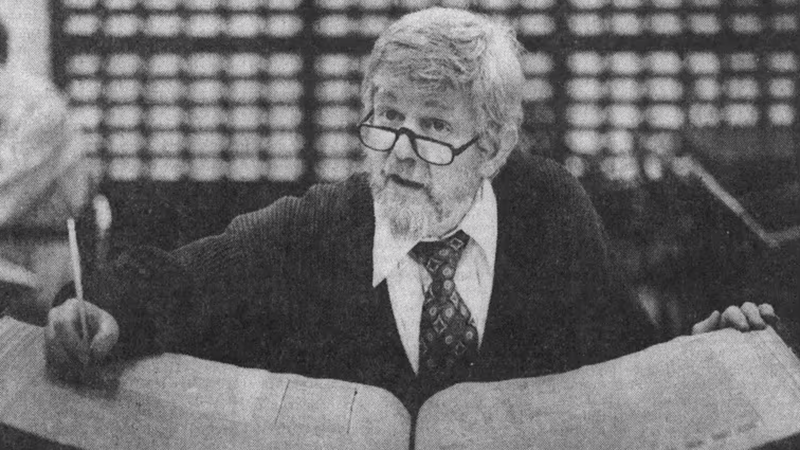
When I learned that Mr. Phil Lapsansky transitioned, I remembered seeing his application for the Mississippi Summer Project in the F.I.S. Archive. I thought it would be fitting if I began with his.
This series on Freedom Summer, or the Mississippi Summer Project, honors the 60th anniversary of this massive civil rights initiative. Since the fall of 2023, I have been working with civil rights veteran Jan Hillegas with the F.I.S. Library Project, an archival collection she has curated since 1965. This series uplifts the narratives of the countless volunteers, the out-of-state “civil rights agitators,” and local people who participated and shaped Freedom Summer.
“I x indefinitely”
On the final application page for the Mississippi Summer Project, the Council of Confederated Organizations (COFO) asked applicants to check the following box:
_ I work for SNCC from June 7,1964, until August 25, 1964._ I work for SNCC from June 7, 1964, until July 15, l964.
Freedom Summer volunteer Phil Lapsansky created his own response, marking x next to his handwritten indefinitely. He began organizing in Mississippi that long, hot summer, leaving two years later in 1966.
Phil Lapsansky’s Application for the Mississippi Summer Project (page 4), 1964, F.I.S. Library Archive Project
Phil had spent his 20s engaged in the struggle for civil rights. He spent two years in Mississippi in 1964 and 1965, working in support of voting rights for African Americans and writing articles and press releases. His interest in African American history was sparked by his experience with the segregated South and its violence. He came to Philadelphia intent on continuing his education in the then‐new field of Negro History and the job opportunity at the Library Company in 1971 seemed a perfect setting.
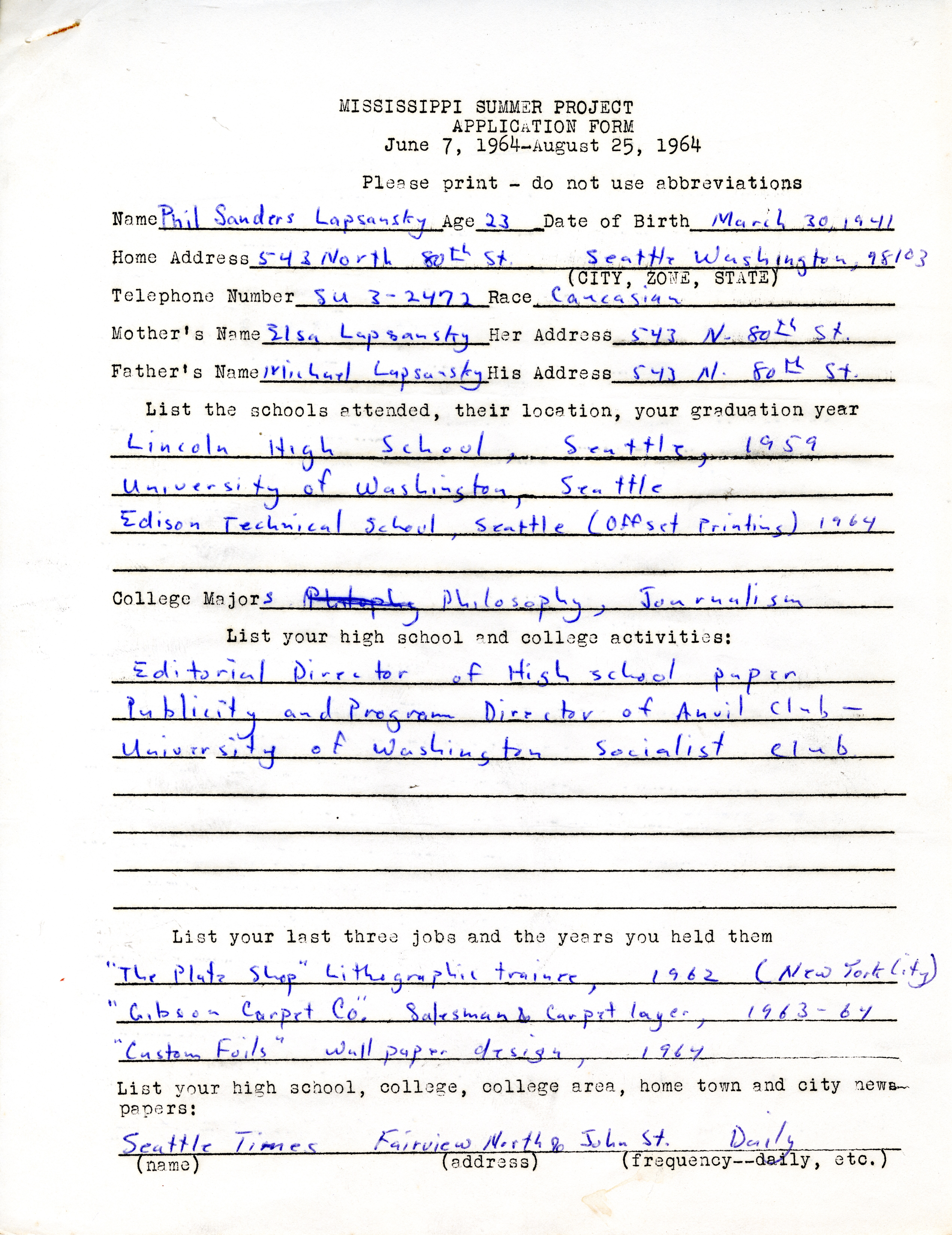
Phil Lapsansky’s Application for the Mississippi Summer Project (page 1), 1964, F.I.S. Library Archive Project
When I teach about Freedom Summer, I always walk students, tourists, and listeners through an application. Whether blank or completed, these applications inform readers of the types of questions COFO-SNCC asked and give a picture of who these volunteers—the nearly 1,000—were who came to Mississippi that long, hot summer of ’64.
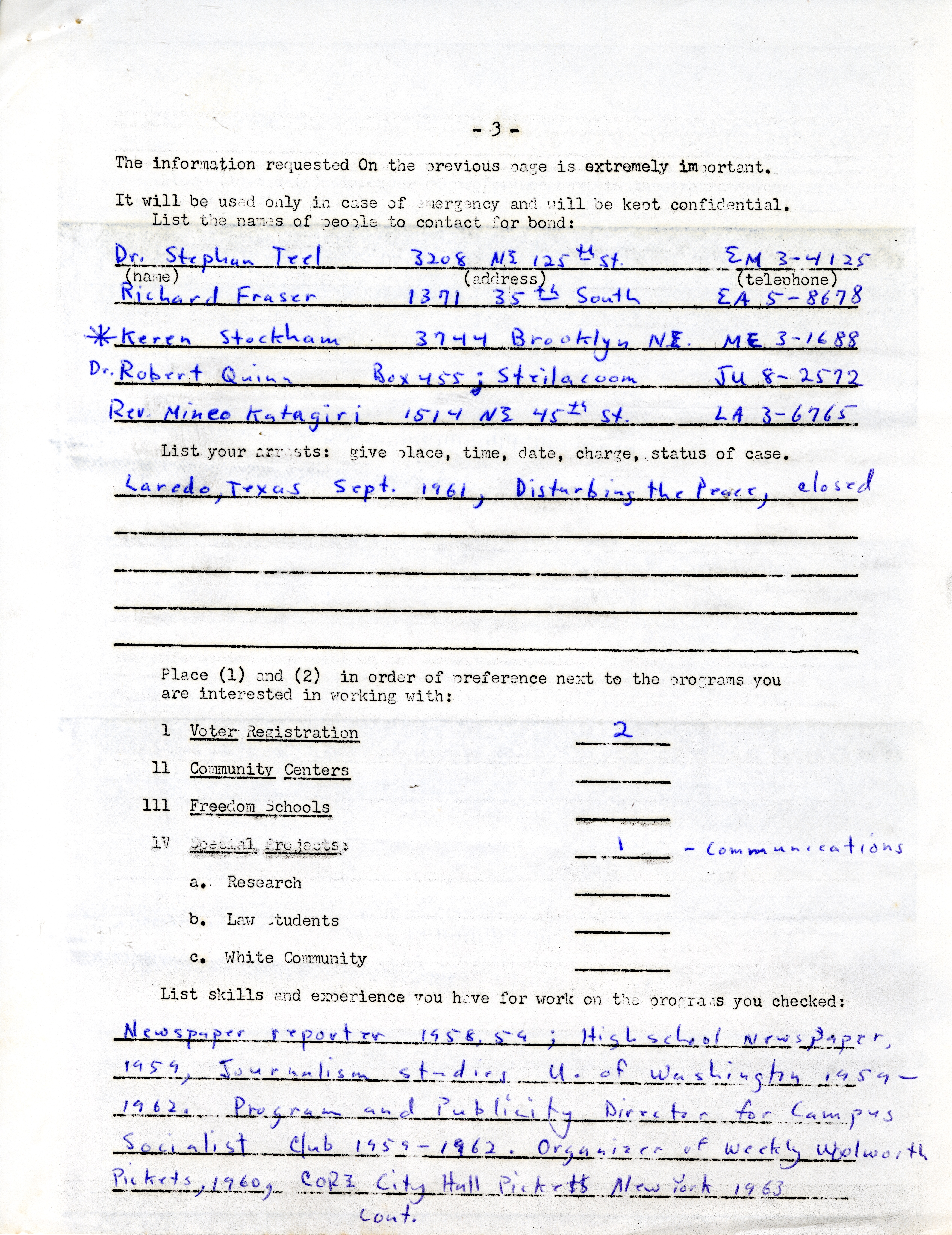
Phil Lapsansky’s Application for the Mississippi Summer Project
(page 3 ), 1964, F.I.S. Library Archive Project
The four-page application asked an applicant to list family members’ names and contact information, those interested in knowing about their activities that summer, and those the organization could contact if they were arrested. You should list your senator and congressperson, the names of local newspapers, and any organizations you are a member of. Your networks were vital in sharing information about Freedom Summer and casting a national spotlight on Mississippi. Lastly, list your preference in working with the following: voter registration, community centers, Freedom Schools, and special projects. Share your skills and experiences in each area; tell us how fast you can type, if you can drive a car, the state in which you hold a driver’s license, if you can support yourself financially, and how long you can stay in Mississippi.
Other COFO records document the harassment Lapsansky encountered from police and white vigilantes. This included his arrest in November 1965 on the false charges of driving while intoxicated and possessing illegal tags and a driver’s license. Other reports documented group harassment Lapsansky and others faced while organizing in Mississippi.
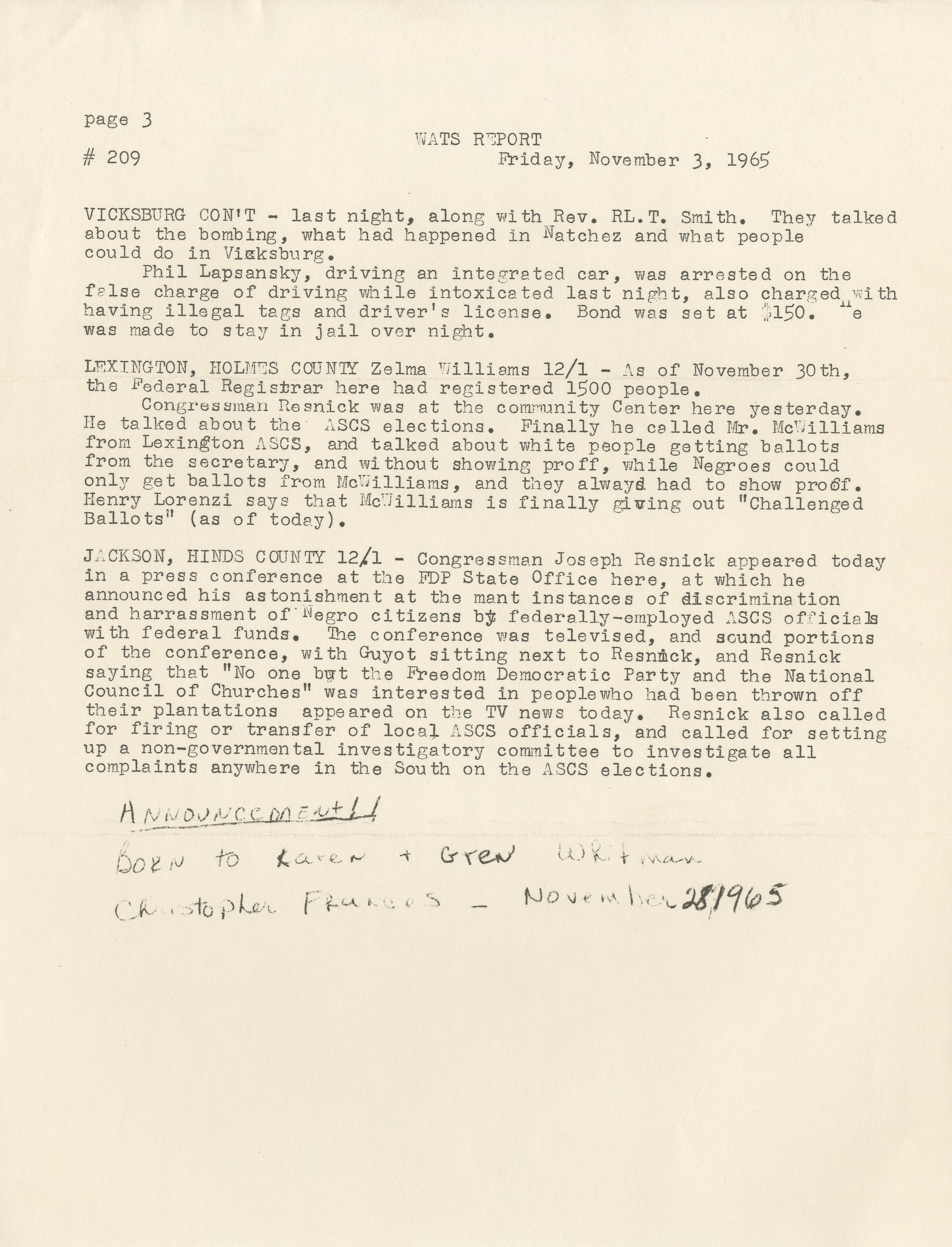
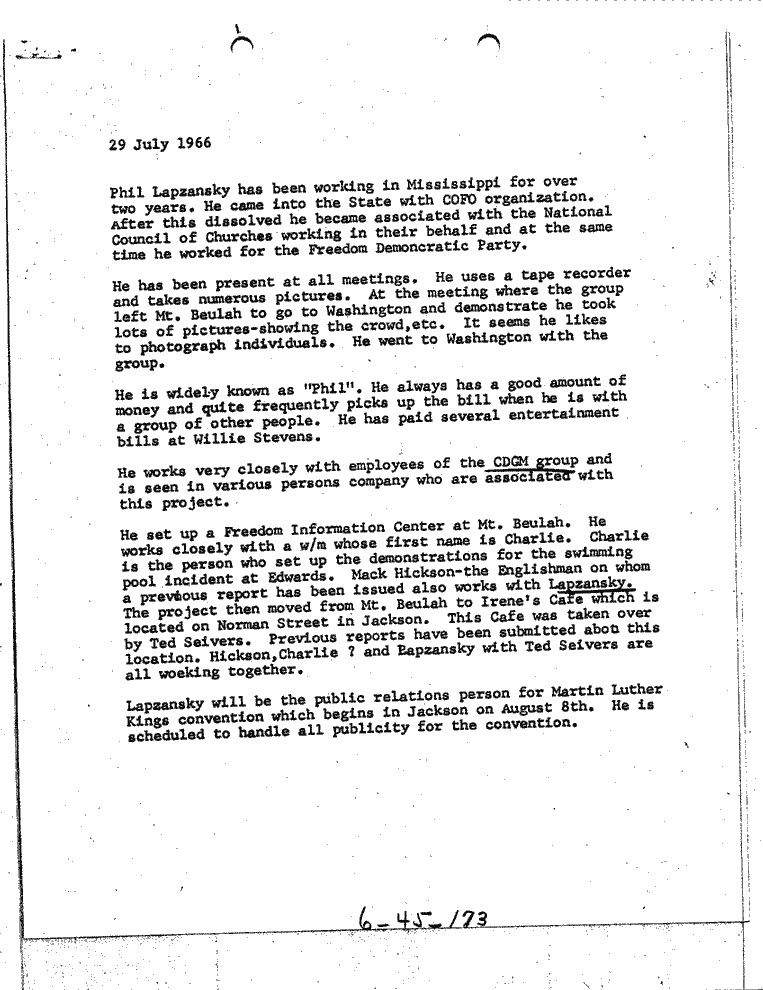
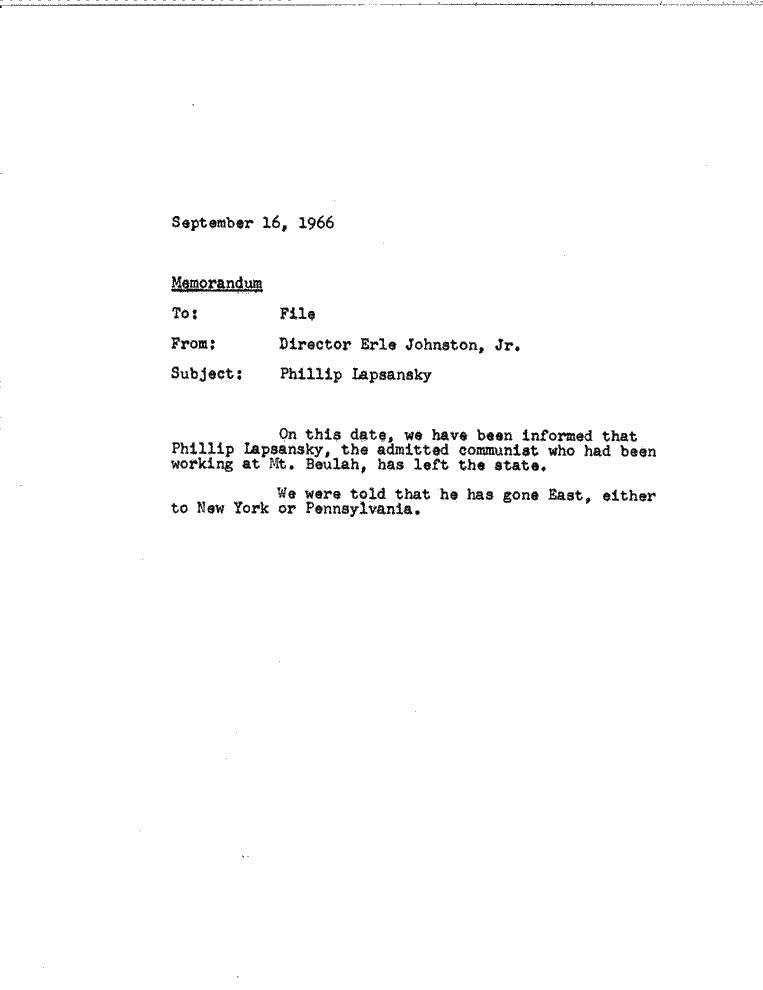
Lapsansky remained in the state for two years, amassing nearly 50 documents in the Mississippi State Sovereignty Commission, the state’s surveillance group. After COFO dissolved in 1965, he worked with the following organizations: the National Council of Churches, the Mississippi Freedom Democratic Party, the Child Development Group of Mississippi, and the Freedom Information Service.
Christina J.
 Diary of a Historian

Leave a comment